Sunday, September 11, 2005

What Can We Learn From Agassi's US Open Run...?


One thing we call learn from Andre Agassi is to just not give up...! He is tenacious, that's for sure. As I write this commentary I'm watching the 2005 US Open men's final. In the first set (Agassi vs Federer) Agassi saved 7 set points before finally succumbing. One thing's for sure, Andre is going to make some noise and go down swinging.
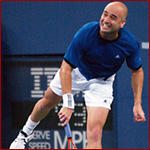
One key to Andre's success is that he takes care of his serving games. Through the semi's he is the tournament ace leader. But then again he has played a lot more games than Federer going into the finals... 117 extra games to be exact. But that's the mark of a 'grinder', someone who hangs in there and just grinds it out. The only problem is that it's tough to grind against a guy like Federer who can hit a winner from pretty much any where in the court.
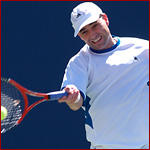
Another key to Andre's success is that his baseline game is solid and his inside out forehand has long been a reliable weapon. He uses an open stance on nearly 100% of his forehands. And he drives his two handed backhand but is able to slice the one hander when he needs to. He mixes up spins very well. He mixes his depths well, too. He's really developed a nice deceptive backhand drop shot that he's been using a lot lately to keep his opponents off balance.
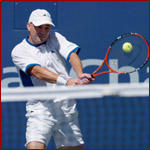
And while we're on the subject of groundstrokes, we shouldn't leave out Andre's return of serve. He's really developed a great all around game through out his career and that's why he's in the finals of the US Open this weekend.

The final testament to Andre is how he really turned his life around. Young players reading this column won't remember when Andre came on the tennis scene as a brash teenager with long, psychedelic hair and a very punky attitude. He had early success winning the French Open, then faded from the radar for awhile. But he had a change of heart in his late 20's. Now, he's beloved by nearly everyone and truly he's become an ambassador for the game of American tennis.

My attitude toward Andre has changed considerably over the years. And now having experienced the joy of the birth of my son and can see how much my life and perspective has changed in just 7 weeks, I understand how marrying Steffi Graf and having kids has had a tremendously positive effect on Andre. I suppose in that regard I identify with him closely.

So today's tip ties in a little with my tennis tip from March 27 on having a role model If you love tennis and want to get better then you need to become a student of the game. And just keeping up with the players and what is happening on the world tennis scene is one way to be a thorough student of the game. As I close this commentary Andre has leveled the match by taking the second set and it's 2 all in the third. What ever happens, Andre will still be an American-Tennis hero in my book....!

Next week: A look at Roger Federer. -You gotta like a guy with a great one handed backhand like that... Too bad he cut off his pony tail... (and too bad he's not American...)

Monday, September 05, 2005

Tennis Tip... -Don't Make Excuses


I watched the US Open over Labor Day Weekend. I especially enjoyed hearing the post match interviews of the players. It was very interesting to hear what the players had to say, especially those who had gone down in defeat. Remember that it's not being a good sport to make excuses about one's loss. To say that you played poorly in defeat is rude to your opponent. (even if it is the truth...) Bite your tongue and swallow your pride if you have to. It's good sportsmanship to give credit to the victor. It's bad sportsmanship to make excuses.

Inspite of the antics of John McEnroe and Jimmy Connors over the years, tennis really has a tradition and legacy of sportsmanship and good manners. Accept responsibility for a loss and move on. One of the life lessons tennis teaches is how to react to adverse conditions. There is a winner and loser for every match up. Learning to win and lose with style and grace is a trait that is developed over time. No body wants to hear how the other guy cheated, or you were injured, or that you just played terrible.


In short, don't make excuses. A healthy attitude toward winning and losing is necessary to become a champion on and off the court. Learn from your setbacks. Try to avoid making the same mistakes in future matches. You'll be more fun to hang out with and people will like you more...!


Monday, April 18, 2005

Coach Sam's Quick Winning Tip

Today I only have a few minutes before I head out the door but that's ok because today I have a quick, easy tip for you.

Don't be in such a hurry to win the point so much. Nearly all points are lost rather than won. That means the other person messes up before you can hit a winner on them.

Wait, What's that...?

YOU'RE the one who always messes up...?

Well, try this. Make it your goal to hit at least the first three balls back in the court. Pick a target like deep down the middle, one of the safest possible target zones. If You are still in the point after three shots then you might want to consider being a little more aggressive, but You'll be very surprised at how if you give your opponent an opportunity, then they'll beat themselves.

I use this strategy all the time and I very seldom have to adjust my game plan. When I do, then it's just for a little variety.

That's all I have time for this morning. See You back here next week.

Coach Sam

Sunday, April 03, 2005

Tennis Tip: Realizing One's Potential

Remember my tip last week...? Having a role model...? Well as a coach I have several role models. My coaching style has evolved from being exposed to some of the greatest tennis minds ever. While working at John Newcombes Tennis Ranch in New Braunfels I was trained by Jeremy Fieldsend who has made a career out of managing Newk's. I also took away some good coaching advice from Clarence Mabry, Who was Newk's Coach when he was ranked number one in the world. But enough of the name dropping...

I'll recall some good advice from Jeremy and Clarence in the next few months. But two other coaches who have heavily influenced my teaching style are College Coaches Dave Snyder from the University of Texas and Chuck Kriese from Clemson University. Today's tip is what I've learned from my interaction with Coach Kriese.

Philosophers, psychologists, and teachers all testify to three areas of human development: The Physical, The Mental, and the Emotional. Tennis players must also develop as people in order for their games to benefit. Not only must they be physically capable of the necessary skills, they must have confidence in their ability, and most importantly, be comfortable with each new level of play and it's responsibilities.

In the early stages of development the physical skills must be emphasized. They are the foundation without which the other areas cannot be developed. Later, the mental aspect is developed, enabling the physical to become functional. The last area to be developed is the emotional, which either enables the mental and physical to work together, or becomes the monkey-wrench that eventually breaks down the machinery.

So take care to develop all three areas. Too many coaches focus only on the physical. Too many players also focus only on the physical. After a while, if the mental and emotional areas aren't addressed then there's no way the player will reach his or her potential.

I'll try to address tips on all three areas of player development, so stay tuned. And as always, I welcome your questions or comments. Post a comment right here or send me an email to coachsam@sbcglobal.net

See you next week. Bye for now,

Coach Sam

Sunday, March 27, 2005

Get a Role Model


I always ask my first-time students a few questions to test their tennis IQ and to get to know them better. My first question is what sparked their interest in tennis....? If the answer is 'my mom's making me do it, I know I have an uphill battle on my hands...! But I rarely hear that response. I just like to know what's behind someone's motivation. It helps me coach them better. My motivation to play tennis when I started at the age of 12 was because I had a crush on a cute 13 year old girl who played...! And there's nothing wrong with that, because I think I turned out OK. But anyway, before I digress from here, let me get back to my topic of the day.

Another question I always ask is for them to name a pro player they may have seen on TV or read about, or perhaps someone they identify with.

I advocate watching every pro tennis match you can. Never miss an opportunity because that's like getting a free lesson.

Eventually, I want my students to have a role model. Someone who they might want to emulate because of outstanding shot, or temperament. This role model doesn't necessarily have to be a turing pro. It can be a coach, another peer, really it can be anybody. and it's ok to have more than one role model for different shots.
My role models were players who were a little shorter. I stand 5 feet 5 inches with only one pair of socks on, so I looked for successful players who border="0" />were the same stature as myself. I'll list some of my childhood role models and I know that these names won't mean a thing to many of you. You are probably either too young to have heard of them or you just didn't
grow up in the Bay City area like I did. I had many role models. On the professional side my all-time favorite player and role model was Bjorn Borg. I loved his temperament. He was quiet and stoic. He never showed emotion. He was one of the coolest players under pressure that I've ever seen. Another Pro player I admired was Harold Soloman. He was my height and had very steady ground strokes. Good temperament, too.


Then I had two local heroes. Kurt Zeller was one of the best players in Bay City when I was growing up. He was very steady and had a great slice backhand. He was a very smooth player and I've always tried to copy his game style. Another player I admired was a man named Michael Hansen. He was from Bay City and played college tennis for Houston Baptist University. He had a great serve and was pretty good at the net, too. Both these men would hit with me from time to time and they were a great inspiration to me growing up. I learned a lot just by watching, listening, and hanging out with them.

So, if you don't have a role model, get one. Have more than one. Have one for each different stroke if you want to. And look for local role models as well as pros on the world tour. This will help you improve your game in a hurry.

Thanks for reading my weekly tip. I welcome your comments and questions. Post one right here or email me at coachsam@sbcglobal.net

See you next time...!

Coach Sam

Sunday, March 20, 2005

How To Improve Your Game on A Budget

I know many very talented players who achieved a high level of competency without spending a lot of money on lessons. Certainly, if you have the opportunity to take lessons then by all means do that. But make sure that you get the most for your investment by practicing as much as you can on your own time. A coach can only give direction and make suggestions, but it's up to the individual to make the sacrifice and put in personal training time to move to the next level.


Here are some inexpensive ways you can improve your game.
  1. Read everything you can about tennis. There are a lot of good publications out there. When I was a young player I devoured Tennis and World Tennis Magazine. I read every word cover to cover. There are also lots of good books at the local library. You can also try your local half price book store for some bargains on great titles.
  2. Watch Tennis Matches on Television. There is much more tennis coverage on TV than there used to be. I wish the tennis channel was being produced when I was a junior player. Sometimes the commentators aren't too good, but you turn the sound down. There's always something to be learned by watching better players.
  3. Go to the net. I mean the internet. There are a lot of great instructional sites out there. I'll try to make that a topic in the future and provide some good links for you to check out. Until then, at least you have me...!
  4. Buddy-Up with a friend. When I was in High School, I had a friend that I played doubles with and we were each other's personal trainer and coach. We fed drills to each other, we served and returned to each other, we worked out instead of just playing matches against each other. It's always a good idea to practice with a partner who is 'like minded' in terms of goals and work ethic. If you don't have a partner, there's always a backboard....
  5. There's nothing wrong with group lessons. While one on one private lessons can certainly be beneficial to one's game, a good group lesson is a great deal more economical, and a good instructor knows how to create an environment of learning and motivation in a large group setting.

Try some of these suggestions and you can still take your game to the next level without investing in private lessons or going off to a week-long tennis camp or academy.

Just for your information, I was a self taught player. I learned tennis on the public courts in Bay City, Texas. My game was primarily influenced by the methods described above and through hitting with caring adults in the local tennis community.

Thanks for reading my tip. i haven't posted on this site in a while, but I'm going to try to make it a habit of posting a new tip a couple of times a month at the very least, so please check back again.

Bye for now,

Coach Sam

Tuesday, November 02, 2004

Setting Goals and Self Discipline

Certainly, everyone likes to see improvement in their tennis game. But what can you do if you stop seeing improvement...? At first, when tennis is very new to a person then improvement seems to flow. Every time you go out to play, you get a little better. Invariably though, players will 'plateau'.

That's when it's time to 'dig in...' Setting a goal, or goals is the first step. Do you want to beat a particular person...? Hit a new shot...? Add spin, power, or placement to your arsenal..?

Make it your goal. Write it down. Tell someone about it. Perhaps you can find a practice partner and or a coach. Together, You can both make goals and pledge to help each other achieve them. Ultimately, it's going to come down to your individual practice habits and determination. If you don't practice very much at all, or you're practicing the wrong techniques, how can you realistically expect to improve...?

Think about this for a moment. How much do you really want to improve your tennis game...? How much are you willing to sacrifice to get better...? Are you willing to sweat...? Are you willing to put your ego on the shelf for awhile...? Are you willing to invest the time it takes to see improvement...? I'm afraid I'm getting a little bit philosophical here, but I think that things we value are worth a certain degree of sacrifice. How much do you value getting better in tennis...?

Just going out and hitting balls once a week may not be enough. If you want to achieve the highest level of your potential then You really need to become a student of the game. By being a student I mean read tennis instruction, watch televised and live matches, exercize, weight train, play practice sets, etcetera... And You have to have the discipline to do that day in and day out until the desired result is achieved.

Now, how can you define 'discipline'...? In this scenario I'd define discipline as the ability and willingness to perform certain actions and tasks regardless of one's personal feelings...!

You may not feel like working out or practicing today. You may be a little sore or distracted, maybe you have to make a choice between a tennis related activity or another activity. Discipline is choosing tennis over the movies. Discipline is going for a run on the day after you played a tough three set match (or two). Discipline is necessary to achieve goals. (And not necessarily tennis goals.) Discipline is necessary to have a successful life, Period. For me, that's what coaching tennis is all about. Helping a person develope life skills in a tennis setting.

Now, just because I'm a professional coach doesn't mean that I expect everyone to have this same attitude toward tennis. And it doesn't mean that I only want to work with highly motivated athletes who give their heart, mind, and soul to tennis. The fact is, I love working with the recreational player whose motivation to play is just exercize and fun. And I approach coaching the recreatioanal player a little differently. I want to make that disctinction because this tip is written primarily with the serious competitive player in mind.

Ask youself some tough questions. How would you rate your motivation and determination to improve your tennis...? How is your discipline?

If you'd like to discuss how to go about moving to the next level email me or post a question on this blog. I can be reached via email at coachsam@sbcglobal.net

Thanks, and I'll see you on the courts!

Coach Sam

.

Thursday, October 07, 2004

Emotional Management In Tennis

Tennis is a great outlet for a person to let off some steam. Indeed, any sort of exercise that stimulates the heart, gets the blood flowing and also engages the mind is a cut above the rest in my opinion. Tennis is very versatile in that it can be either social or competitive exercise. You just can't get the total package that will engage all the senses on an exercise bike or treadmill...!

Today I'd like to look at managing emotions in tennis. Specifically, anger management. Very few players raise the level of their game by getting angry. True, some former tennis stars like John McEnroe and Jimmy Conners seemed to get fired up and produce better results when they got angry, but that was the exception rather than the rule. Tennis History has far more good sports than bad ones. It's sad that the 'bad actors' get more attention.

Why not take a look at today's mens champion, Roger Federer. He is a perfect example of style and grace. (and not a bad backhand, either!) You won't see him lose his cool any time soon. But you're thinking it's easy to be cool when you're number one in the world.

What about me...? I just want to beat my neighbor or classmate. And it frustrates and makes me angry when I make stupid mistakes and don't achieve that goal. My advice is to first look at the big picture. Why am I getting angry? Is it something I can control or are external factors causing the anger? Does getting mad make me play better...? The fact is that getting angry often causes more problems and makes a difficult scenario worse. Recognizing this in a calm, sane moment is the first step towards changing the behavior.

You don't want to get mad for a couple of reasons. First of all, it makes you rush and play worse. Second, it gives your opponent a little lift emotionally when he or she knows that you're losing your cool. You don't want to give your opponent any extra advantage so let's take steps to deal with anger right here and now.

Coach Sam's 3 Simple Tips for Dealing with Anger:
1. Slow Things Down, Time heals all Wounds.
2. Practice Positive Self Comments when You make a mistake.
3. Let off steam by screaming into your towel.

The first two tips definitely work. The third tip may not work for you. (It works for me, though). Try it sometime. It's actually kinda fun to do and will keep you from getting a point penalty if an umpire is near by. It might also unnerve your opponent into thinking you are a ticking time bomb ready to go off because it's not a normal way to vent anger. It's also a little entertaining for the crowd if anyone is watching...

Tuesday, September 28, 2004

Mental Preparation for Competition

Good players do more than just show up for a match. They prepare themselves mentally for the task at hand before they ever step on the court. They then go into the match with their toolbox of strokes and play within themselves the best they can, adjusting their strategy and tactics when necessary.

Try this next time you play a match: Take a few moments to mentally settle yourself before you step on the court. Start with at least 5 minutes of just good deep breathing. (The pros take considerably more time) Try to clear your mind of distractions. Then develop your game plan. Mentally rehearse a few winning shot combinations. See yourself playing well and executing finishing shots in your minds eye. Nothing fancy is necessary. In fact, the more simple the game plan, the better. Be sure to take into account your opponent's style of play as well as your own strengths and weaknesses. Then go out and play with a purpose. If results don't go your way then be prepared to change game plans if necessary.

Remember that a healthy attitude toward winning and losing is necessary in tennis. By applying a mental pre-game checklist you are increasing your chances for success.